The sentence that stops young developers
I meet young people with energy, ideas, a desire to work and the ability to learn. When the conversation turns to real estate entrepreneurship, many of them say the same sentence to me: “I don’t have enough money to start”.
I understand where the sentence comes from. Real estate requires capital, commitments, guarantees and financing. But it expresses an assumption that is not always true: that to be a developer, you also have to be the person who finances the entire deal and the person who holds the land.
In my course I present the matter differently. Every good deal has three central axes. You need a good project. You need financing. And you need a developer who knows how to identify an opportunity, connect the pieces and create value that did not exist before. All three are necessary — but they do not have to come from the same pocket or the same person.
The three axes of the deal
Project: land, a property, rights or an opportunity whose legal, planning and economic feasibility can be examined. Not every plot of land is a good project, and not every offer is an opportunity just because the price sounds low.
Financing: the equity and sources of money needed for purchase, planning, development and execution. Financing must suit the timing, the risk, the cash flow and the structure of the deal. Money alone does not turn a bad project into a good one.
Developer: the person or team who identifies the potential, examines the obstacles, formulates a plan, brings in professionals, builds the partnerships and gets things done. The developer is not just “someone who knows people”; his contribution is measured by what he is able to create and execute in practice.
When the three axes meet correctly, you can start building a deal. When they are not connected, sometimes there is land without progress, money without direction, or an idea without execution ability.
You have a developer’s skills — but no money or land?
Perhaps you have an understanding of a particular market, an ability to find deals, familiarity with people, a talent for negotiation, or an ability to think creatively about deal structure. These are resources and abilities that can be the basis of a developer’s role.
The next step is not to complain that there is no money, but to look for a project with real potential, to examine it, and to build a serious proposal for a partner who can provide financing. The better the checks and the clearer your role, the better the basis for a conversation with a partner.
But contacts and an idea are no exemption from preparing a business plan, due diligence and legal structuring. Anyone who proposes that a partner put his money in must be able to explain what the risk is, what each side’s responsibility is, and which outcomes are not guaranteed.
You have money — but no project or developer experience?
Capital is also a significant resource. A person who has free capital does not have to become an expert in planning, construction and taxation overnight.
He can identify an experienced developer with a proven track record, assess that developer’s abilities, choose a project that matches his goals, and enter a transparent partnership. In such a case he may contribute the financing axis, while other partners bring the professional opportunity and development management.
It is especially important not to confuse the ability to finance with the ability to manage. Whoever provides capital needs to understand the structure of rights, the collateral, the reporting and exit mechanisms, and not to rely on the promises of whoever brings the deal.
You have land or a project — but no money or team?
You may be a landowner with planning potential, or you may have identified a property that can be enhanced, but lack the ability to finance and lead the whole process alone.
Rather than assuming the deal is stuck, you can explore cooperation with a developer who understands planning, licensing and management, and with a financing partner who fits the structure and the risk. The landowner brings the opportunity, the developer brings execution ability, and the capital makes it possible to move it forward.
Of course, a partnership is not magic: it requires a valuation, agreements on ownership and control, the division of profit and loss, commitments, guarantees and exit mechanisms. You must check whether the proposed structure makes sense for all the partners even in a less optimistic scenario.
What I teach about entrepreneurship
My message to people at the start of the road is simple: if you have one real component of the triangle, you have a starting point. You may not yet have a deal, but you have something you can bring to the table.
Often the obstacle is not only the lack of money. It is the difficulty in identifying exactly what we have, what we know how to do well, what is missing, and who can complete the other parts.
Entrepreneurship begins the moment we stop asking only “what don’t I have?” and start asking “what do I bring — and how do I connect what is missing to it?”
That does not mean every person with an idea will manage to raise money, or that every landowner will find a suitable developer. It means it is worth learning to build value and to look for partnerships, instead of thinking that the only way to start is to accumulate all the capital yourself first.
Field example: Green Hills
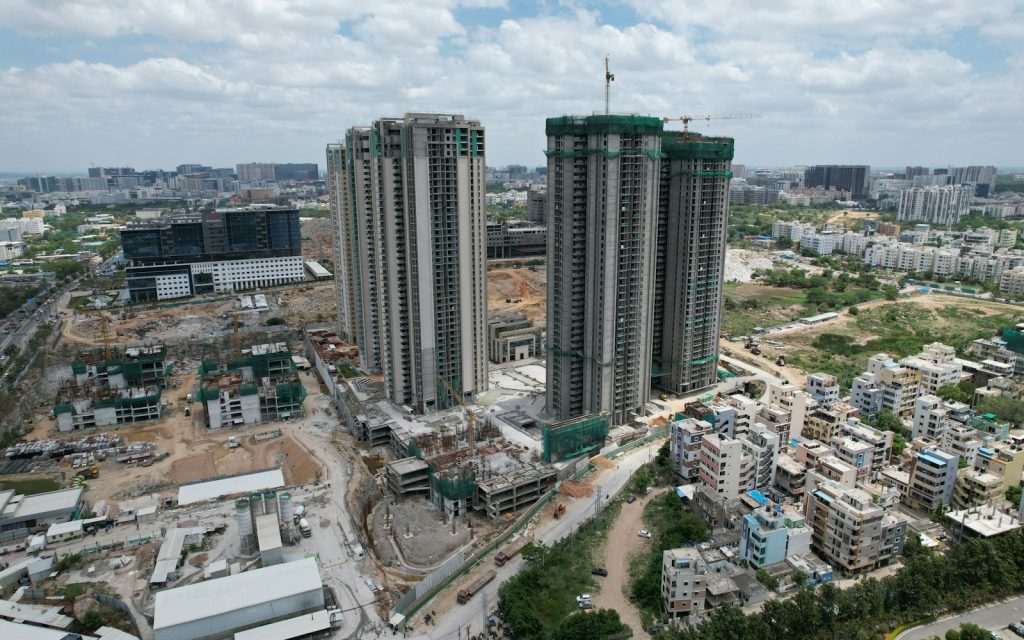
In Green Hills, Apikim is the developer company promoting planning in the wider complex. Meny Group worked in a different dimension: we identified within the venture the opportunity to establish a dedicated brand, to assemble a group of buyers and to manage the relationship with them.
We did not own the entire land complex, and we did not lead its planning. We created value through understanding the opportunity, assembling the group and conducting the activity with the buyers. This is an example of how the developer’s role can be clearly defined and professional even when other parts of the deal are held by other parties.
The example does not teach that every project must be built in the same way, but that you must ask what each partner actually brings to the deal — and why the whole can be greater than the sum of its parts.
Before creating a partnership — five practical questions
- Which component do I actually bring — property, money, knowledge, execution ability or access to an opportunity?
- What is missing from the deal, and which skills and resources must the partner add?
- Who is responsible for planning, financing, operations, decision-making and reporting?
- How are rights, risks, costs and profits divided, and what happens in case of delay or dispute?
- Do the professional checks show that the project itself is worthwhile and that the structure of the deal suits all sides?
These questions are not designed to complicate entrepreneurship, but to prevent a partnership from being formed out of enthusiasm without anyone understanding what each person is taking on.
A developer’s first asset is not always money
I am not saying money is unimportant. Without suitable financing, many deals simply cannot get going. I am saying that capital is one axis out of three.
Whoever brings a quality project, whoever brings financing and whoever brings genuine entrepreneurial ability can form a partnership — provided that each component is checked, priced and regulated in a fair way.
You do not have to hold all the pieces of the puzzle yourself. You have to know which piece you have, what it is really worth, and how to connect it to the others without giving up professionalism and responsibility.
In other words, entrepreneurship is not only the ability to buy a property. It is the ability to connect opportunity, capital and people in order to create something that did not exist before.