
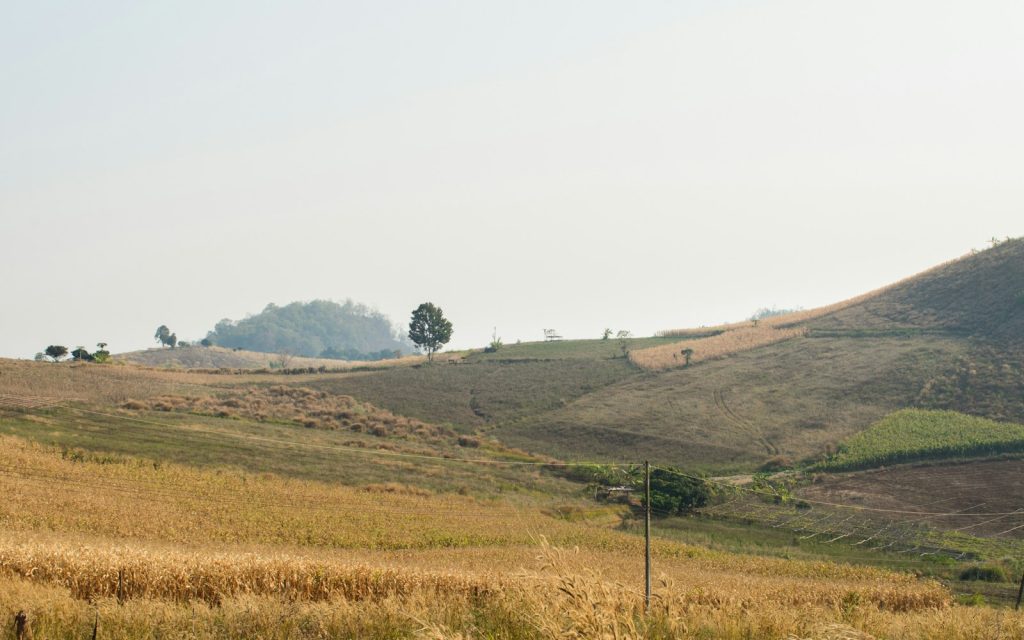
The trap of land that will be worth a lot “one day”
Almost everyone who has ever been interested in investing in land has heard the sentence: “When this area is rezoned, the price will jump.” Sometimes there is real potential behind that sentence. But potential alone is not a timetable, and a general promise about the future of an area is not a planning programme that can be relied on.
You can buy land at a price that looks attractive, hold it for ten or twenty years, and discover that no detailed plan has advanced, that there is no access solution, that policy does not support construction, or that some other obstacle is blocking progress. Meanwhile the money remains tied up in the land, and even if the market value changes, there is no certainty that a real path to realizing the investment has formed.
This is the dormant land we want to stay away from: not necessarily land without any prospects, but land for which we have no adequate basis to estimate when — and whether at all — significant planning progress will take place.
So what is active land?
In our view, active land is land for which there is a checked planning feasibility and a practical work path for advancing it. Not just a picture of a future neighbourhood, but answers to the questions: what is the current planning stage, what needs to happen at the next stage, who the competent authorities are, what the obstacles are, and what can be done to overcome them.
Our test is a test of time. In the investments we look for, we want to identify in advance a reasonable prospect of meaningful progress within a horizon of three to four years, and not rely on the hope that something will happen in twenty years. This does not mean every piece of land must reach an approved master plan within four years; it means there must be a professional justification for the work plan and the milestones expected in that period.
Three aims that distinguish waiting from active investment
The first aim is to assess whether there is a real planning feasibility: is the desired route possible given the situation on the ground, the policy and the planning institutions?
The second aim is to identify obstacles as early as possible: ownership constraints, access, infrastructure, topography, policy, and regulatory or political aspects. The earlier they can be identified, before entering the deal, the more we can decide whether to deal with them, price them into the deal or avoid it.
The third aim is to choose a project with potential for appreciation in stages. We do not want the investment to depend on a single distant moment at which the final approval is granted. We look for a route where real progress — for example a detailed plan, a decision to deposit, or advancement towards approval — can reduce uncertainty and affect the value of the land and the options for realization.
Here there is an essential distinction: value appreciation is not guaranteed even in a project that is advancing in planning. Market prices, costs, taxes, the financing position and external conditions all affect value. We aim at sustained potential for appreciation and do not commit to a fixed rate of return.
What do we check to distinguish dormant land from active land?
The planning checks are the heart of the distinction. Before entering a deal, we examine a series of questions:
- Is there a possible future zoning for the land, and what is the planning basis for it?
- Is it within a relevant jurisdiction, and what does this location mean?
- Are there existing access routes, or an access solution that can be advanced?
- Is the land held by one owner or by many owners, and could that delay planning or decision-making?
- What is the planning policy in the area, and is there continuity with developed areas or existing plans?
- Are there topographical difficulties, engineering constraints or lack of infrastructure that could delay the plan or undermine its viability?
- Is the route inside or outside the Green Line, which planning institution is competent, and what does this mean for timelines, procedures and political exposure?
- Finally, what scope of rights appears reasonable in a conservative scenario, in a realistic working scenario and in an optimistic scenario?
These questions are not only meant to say whether the land is “good” or “not good”. They help us assess what needs to happen for it to advance, how complex the route is, which delays may arise and which actions need to be taken now.
Appreciation is not one event — it is a journey
The common mistake is to see appreciation as a binary event: either the land was rezoned or it was not. In practice a planning route contains many milestones: establishing the planning framework, an outline plan where relevant, addressing access, preparing a detailed plan, decisions by the planning institutions, deposit, objections, approval of the master plan and then permits and construction.
Not every station is required in every project, they do not all occur in a uniform order, and not every advance necessarily raises the value. But when you can show what has been completed, what is in process and what the next target is, you get a very different picture from a general promise about a distant future.
This is also how we will present our projects: at each project we will show where the land stood when we entered, which obstacles we identified, what progress we actually made, which milestones were achieved and what remains ahead. Alongside each station we will also examine whether there has been an economic change that can be substantiated, without replacing evidence with slogans.
Where does SAFELAND come in?
The SAFELAND method starts with a testing protocol designed to create six layers of protection for a deal. Each layer has a different role: to examine risk, to strengthen the quality of the decision, and to keep as much flexibility and control as possible further along the road. The full protocol and the six layers of protection will be covered in a separate article: SAFELAND Testing Protocol — Six Layers of Protection.
In this article we focused on the planning layer. It is the one that lets us ask not only “does the land have potential?”, but “is there a reasonable route to advance it within the foreseeable horizon?”. Only after we answer that can we formulate an action plan, set milestones and later examine what in fact happened.
The test for a land investor
Instead of asking only how much the land will be worth on the day it is built on, it is worth asking: what is expected to happen in the next three or four years? Which decisions may be made? Which obstacles still stand in the way? And when will it be possible to re-examine the value of the investment and the options for realization?
This is the key distinction between dormant land and active land. In dormant land the investment rests mainly on waiting. In active land we look for feasibility, a work plan, progress that can be tracked and potential for appreciation along the route.
Not buying only a dream of the future — but choosing land for which there is a professional reason to believe it can be advanced in the coming years.
The new language of land investment
At Meny Group we developed the distinction between “dormant land” and “active land” in order to offer a clearer standard for examining land investments. Instead of measuring an investment only by a promise of future value, we suggest examining it also by planning feasibility, milestones expected within a foreseeable horizon, obstacles that need to be solved and potential for appreciation along the route. This is the language we want to bring to investors — and it is also how we will present and examine our projects.